
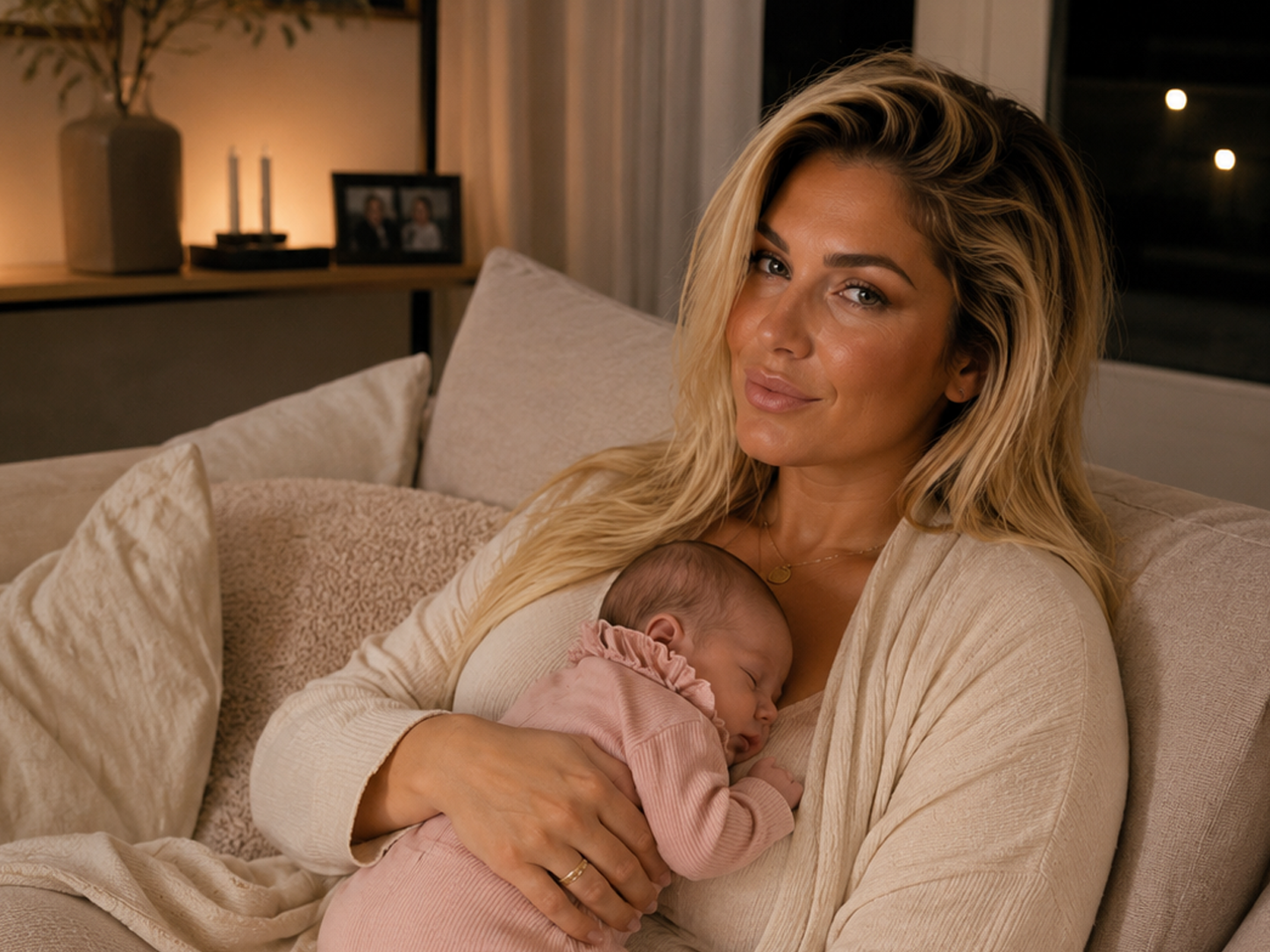
Bringing your baby into the world begins a new rhythm of life. The days can feel slower and faster at once: feeding, holding, soothing, recovering, watching, wondering, sleeping in pieces and learning each other one small cue at a time.
The early baby stage is often tender, intense and quietly disorienting. You may feel deep love, uncertainty, protectiveness, exhaustion and joy within the same hour. That mixture is not a sign that you are doing something wrong. It is part of the adjustment from pregnancy into parenthood.
There is no perfect way to arrive here. Your baby is learning life outside the womb, and you are learning life with your baby. Little by little, a new kind of confidence begins to form.
Newborn life is rarely predictable. Feeding may feel constant. Sleep often comes in short stretches. Some babies settle best while being held close, and contact naps can be a normal part of the early weeks. Crying is communication, not manipulation; it is one of the first ways your baby asks for food, comfort, sleep, warmth or closeness.
Many parents are surprised by how much newborn care revolves around regulation. Your baby is not only growing physically. They are learning safety through your voice, your smell, your touch and the way you come back to them again and again.
At the same time, parents are recovering too. Birth, feeding, interrupted sleep, hormonal changes and the emotional weight of responsibility can all take time to absorb. Some days may feel soft and connected; others may feel messy or overwhelming. Both can be normal.
If you are in the first weeks, start with the newborn development guide. It explains what is typical from 0-2 months, including reflexes, feeding patterns, sleep and early sensory development.
During the first year, your baby grows from a newborn who mainly feeds, sleeps and seeks closeness into a more active, expressive little person. Development happens gradually through everyday care: eye contact during feeds, being held, hearing your voice, moving on the floor, sleeping, playing and being comforted.
Milestones can be useful, but they are not a competition. They help describe how babies commonly develop across movement, senses, communication, growth and social connection. Some babies observe quietly before trying new skills. Others are vocal, physical or sensitive from the beginning.
Your baby's brain is shaped by repeated, ordinary experiences. A calm cuddle, a nappy change with gentle talking, a song before sleep, a few minutes of tummy time or a walk outside all support learning. Babies do not need constant stimulation. They need safe, responsive relationships and enough space to grow at their own pace.
Confidence in early parenting usually grows through repetition, not sudden certainty. At first, every sound and movement can feel new. Over time, many parents begin to recognise small patterns: the cry that often means hunger, the turning away that suggests tiredness, the still gaze that says your baby is taking you in.
Responsive caregiving does not mean getting every response right the first time. It means noticing, trying, repairing and returning with warmth. A baby does not need a perfectly calm parent every minute. They need caregivers who are present often enough, gentle enough and willing to learn them.
Your intuition matters, especially when it is paired with good support. If something feels off with feeding, breathing, alertness, pain, temperature or your own wellbeing, asking for help is wise. Parenting confidence and professional guidance can sit side by side.
The Baby section is designed to support the transition from pregnancy into life with a newborn and through the first year. It brings together calm, practical guidance for the questions that tend to arrive in real family life, often late at night and often before anyone has had enough sleep.
Here you will find information about newborn development, feeding, sleep, milestones, growth, baby health, routines, emotional wellbeing, activities and everyday parenting decisions. The aim is not to give you more pressure. It is to offer clear, evidence-informed guidance that helps you understand what may be normal, what may need support and what can wait.
As this section grows, the baby calendar will guide you through the first weeks and months in a gentle, age-appropriate way, beginning with the newborn stage. You can also use the baby age calculator to check your baby's exact age in days, weeks and months.
There is no single correct way to experience early parenthood. Some families find a rhythm quickly. Others need more time, more help or more rest than they expected. Most move between both.
Your baby does not need perfect routines, constant enrichment or a parent who never feels unsure. They need safe sleep, regular feeding, medical care when needed, loving touch and adults who respond as best they can.
Safety, love, responsiveness and connection are the foundation. The rest can be learned slowly.
Frequent feeding, short sleep stretches, contact naps, crying, startle reflexes and wanting to be held are all common in the early weeks. Newborns are adjusting to life outside the womb, and parents are adjusting too.
You can notice development from birth, but formal milestone checklists usually begin around 2 months. Milestones are guides, not deadlines. If your baby was premature or has health concerns, your clinician may use adjusted age.
Simple everyday care supports development: feeding responsively, talking, singing, making eye contact, offering supervised tummy time, holding your baby skin-to-skin and responding calmly to their cues.
Most newborns are not ready for a strict routine. Gentle patterns around feeding, daylight, sleep cues and calm night care can help, but flexibility is normal and often necessary in the early months.
Ask for medical advice if your baby has a fever, breathing difficulty, poor feeding, markedly fewer wet nappies, persistent vomiting, unusual limpness, extreme sleepiness or if your instincts tell you something is not right.
Discover the most popular baby boy and girl names with meanings and origins.
View names →