
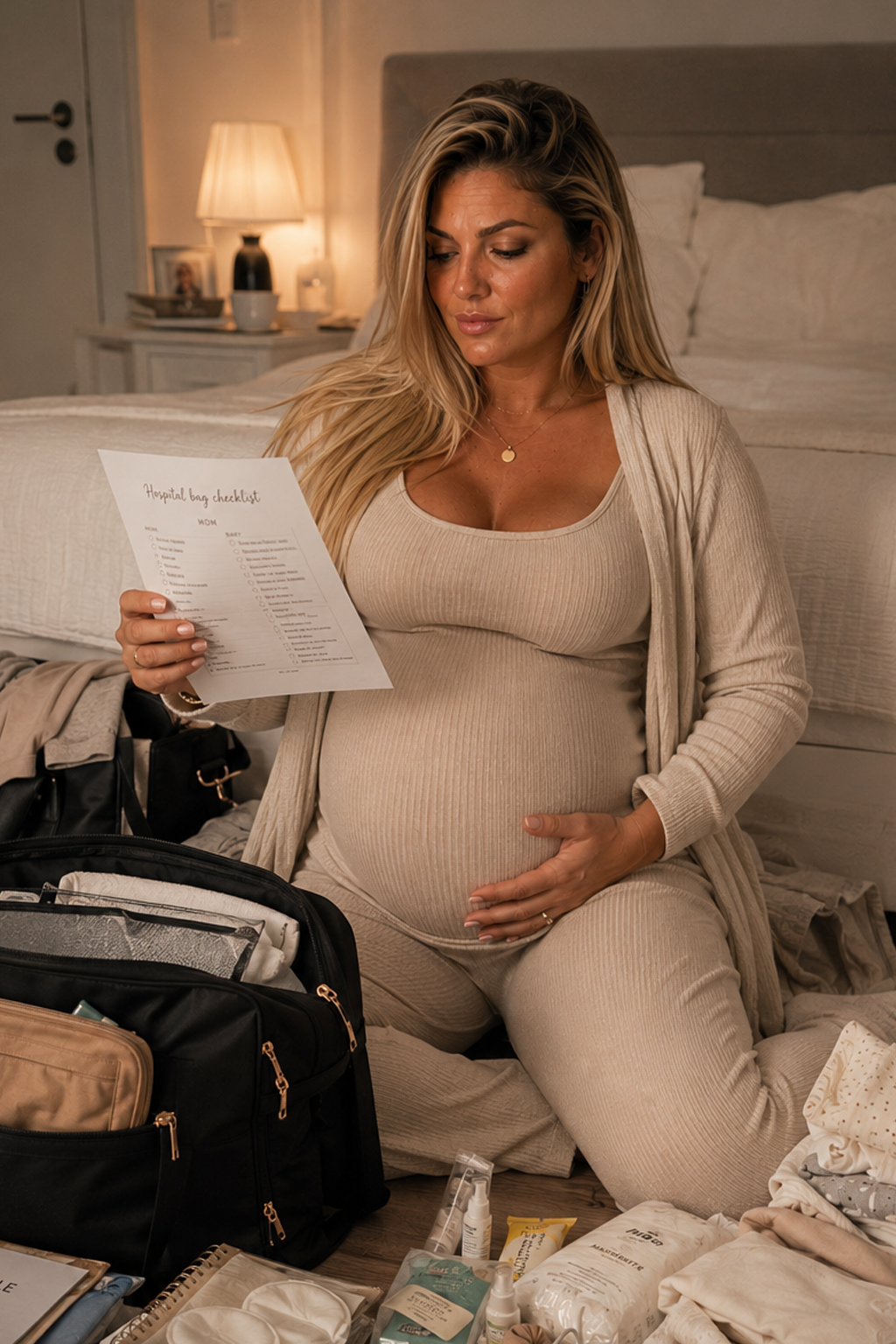
Pack the things you plan to take to hospital or a birth centre in good time, ideally around 34 weeks pregnant to 36 weeks pregnant. If labour starts quickly, you will not need to search for ID, chargers, baby clothes or your going-home outfit at the last minute.
Use this as a practical checklist, then compare it with the list from your own hospital, birth centre, midwife or OB-GYN. What you need can vary between the US and UK, between hospitals, and depending on whether you expect to go home the same day or stay for one or more nights.
If you are preparing for the final weeks, also read the guides for 38 weeks pregnant, 39 weeks pregnant and 40 weeks pregnant, plus the overview of childbirth.
Keep your hospital bag simple and easy to manage. You usually do not need a large suitcase of baby clothes, full-size packs of nappies or diapers, lots of cosmetics, heavy books, multiple pillows or every newborn item you own. If you live close to the hospital, your partner or support person may be able to bring extra items later.
Do not use medicines, supplements, herbal products or labour-inducing remedies without your midwife, doctor or maternity team's approval. If you take daily medication, pack it separately and tell staff when you arrive.
Maternity notes are pregnancy care records used in some health systems, especially in the UK. They may include test results, scans, blood group, risk factors and care plans.
Birth plan is a short written summary of your preferences for labour, birth and early postpartum care. It should stay flexible because birth can change quickly.
Newborn car seat is a rear-facing seat suitable for a newborn's size and weight. It must be fitted correctly before travelling home by car.
A practical time to pack your hospital bag is around 34-36 weeks of pregnancy. Pack earlier if you have a higher-risk pregnancy, twins, planned induction or a scheduled caesarean.
It depends on the hospital or birth centre. Some provide basics, while others expect you to bring your own. Check your local list and pack a small supply just in case.
In the US, bring photo ID, insurance details and any hospital registration papers. In the UK, bring your maternity notes if you have handheld notes, plus ID if requested by your unit.
A birth partner should pack ID, phone and charger, comfortable clothes, toiletries, snacks, drinks, any regular medication and items needed for an overnight stay if allowed.
If you are travelling home by car, you need a correctly fitted newborn car seat. Avoid bulky coats in the car seat; use thin layers and a blanket over the straps if needed.
Discover the most popular baby boy and girl names with meanings and origins.
View names →