
At 10 months old, many babies are constantly moving, exploring and communicating. Your baby may now spend much of the day crawling, pulling up to stand, cruising along furniture and investigating everything within reach.
Personality often becomes even more obvious during this stage. Some babies are bold and adventurous, while others are more cautious, sensitive or strongly attached to familiar caregivers.
Your baby may now understand much more than they can say. Everyday routines, familiar words, gestures and emotional cues all become increasingly meaningful during the tenth month.
Track your baby's exact age in days, weeks and months with the baby age calculator. At 10 months old, your baby is becoming increasingly mobile, interactive and emotionally aware.
At 10 months old, many babies are eager to explore movement, independence and communication. Your baby may crawl quickly, pull to stand confidently and move around furniture while holding on for support.
Some babies begin attempting first independent steps during this stage, while others continue focusing mainly on crawling and standing. Every baby develops at their own pace.
Your baby may now communicate more clearly through gestures, sounds, facial expressions and emotional reactions. Some babies wave, clap, point or respond consistently when hearing their name.
Many babies also become more emotionally attached to familiar caregivers around this age and may seek extra reassurance when feeling tired, uncertain or overwhelmed.
Your baby's brain, movement, coordination and communication skills continue developing rapidly during the tenth month of life. Everyday interaction - talking, reading, cuddling, singing and responding to your baby's cues - continues supporting emotional security and healthy development.
Many 10-month-old babies become increasingly coordinated and physically active during this stage. Crawling, pulling to stand and cruising along furniture often become stronger and more confident.
Your baby may also use fingers more precisely to pick up small objects or finger foods. Fine motor skills continue improving quickly during this stage.
Some babies begin briefly standing without support or attempting early independent steps, although walking commonly develops later in the first year.
Your baby's awareness of the surrounding world continues expanding rapidly. Faces, voices, movement, textures and routines often become deeply familiar and meaningful.
Your baby may recognise favourite toys, anticipate routines and react differently depending on emotional tone, facial expressions and social interaction.
At 10 months old, many babies babble frequently and experiment with sounds, volume and repetition. Some babies may say simple sounds like “mama” or “dada,” although language development varies greatly between children.
Your baby may now respond consistently to their own name, understand simple words and react to familiar routines, songs or gestures.
Many babies also show stronger emotional attachment to familiar caregivers during this stage and may become more cautious around unfamiliar people or situations.
Your baby may now move with increasing speed, purpose and determination. Crawling, cruising, reaching, climbing and exploring often become more energetic and coordinated during this stage.
Many babies are highly motivated to explore their environment and may move rapidly towards interesting objects, pets or people nearby.
At 10 months old, breast milk or formula still remains an important part of your baby's nutrition, while solid foods become a larger and more regular part of meals and snacks.
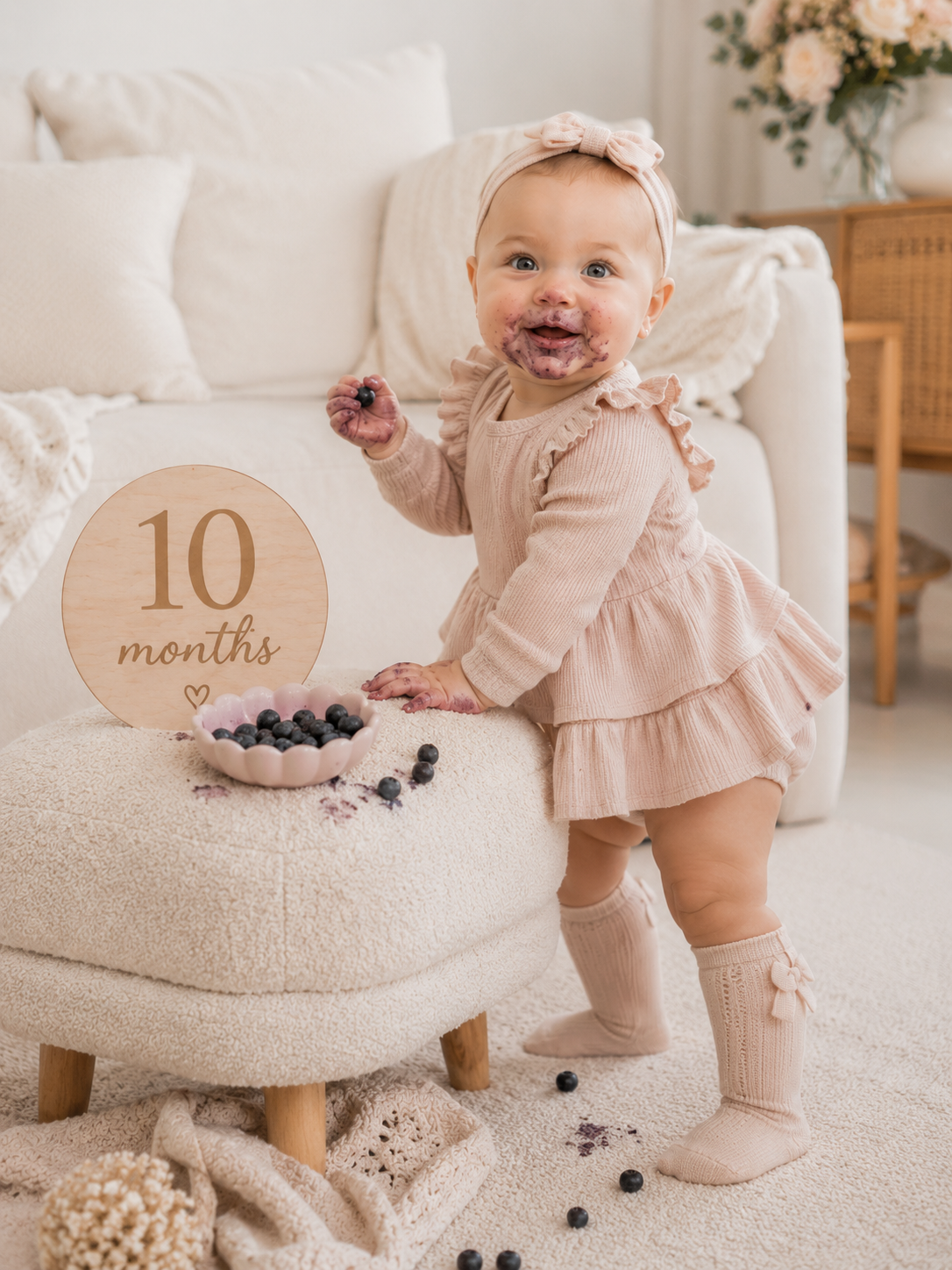
Many babies now enjoy finger foods and self-feeding opportunities. Picking up food pieces helps strengthen coordination, independence and fine motor skills.
Your baby may enjoy soft vegetables, fruits, grains, proteins and a wider variety of textures during this stage. Some babies are enthusiastic eaters, while others remain cautious with new foods and flavours.
Messy eating remains completely normal and is an important part of sensory learning and skill development.
If you have concerns about feeding, allergies, constipation, gagging or weight gain, speak with your healthcare provider or health visitor.
Many 10-month-old babies sleep around 12–16 hours within a 24-hour period, including daytime naps. Some babies sleep longer stretches overnight, while others still wake regularly for comfort, feeds or reassurance.
Sleep patterns can continue changing during this stage because babies are becoming increasingly mobile, emotionally aware and socially attached to caregivers.
Developmental leaps, teething, increased movement and separation anxiety can all temporarily affect sleep during the tenth month.
Safe sleep remains extremely important. Always place your baby on their back to sleep, on a firm and flat sleep surface free from pillows, loose blankets, bumpers and soft toys.
Many babies still enjoy cuddles, rocking, movement and closeness when settling to sleep. Emotional connection and responsive care continue helping babies feel calm and secure.
At 10 months old, your baby learns through movement, imitation, sensory exploration and social interaction. Opportunities for safe movement and exploration become increasingly important during this stage.
Your baby may enjoy:
Simple interaction and everyday routines continue being the most important parts of learning. Your voice, attention and responsiveness remain deeply meaningful to your baby.
By 10 months, many parents feel increasingly connected to their baby's personality, communication style and emotional needs. Your baby may now clearly seek comfort, reassurance and closeness from familiar caregivers.
At the same time, parenting can still feel emotionally and physically demanding, especially during periods of sleep disruption, teething, developmental changes or separation anxiety.
Bonding continues deepening through everyday moments - comforting your baby, responding to emotions, playing together, making eye contact and spending time close to one another.
Your baby does not need perfect parenting. Loving, responsive care and emotional connection continue mattering most.
Contact your healthcare provider if your baby develops a fever, has difficulty breathing, refuses feeds repeatedly, becomes unusually difficult to wake, has significantly fewer wet nappies, vomits persistently or if something simply does not feel right.
It is also appropriate to seek advice if you are concerned about your baby's movement, communication, feeding or overall development.
Parents often notice subtle changes before they can fully explain them. Trusting your instincts and seeking support early is always appropriate.
Your baby may only be 10 months old, but already there has likely been enormous growth and change - for both of you.
There may still be difficult nights, emotional moments and uncertainty. But there may also be more laughter, movement, communication and the growing feeling that your baby is becoming more connected to you every single day.
You are still learning, and so is your baby.
Your baby is not looking for perfection. They are looking for comfort, safety, responsiveness and love - every single day.
At 10 months, many babies crawl or move quickly, pull to stand, cruise along furniture, babble, copy sounds or gestures, respond to their name and practise feeding themselves. Some may try brief independent standing, while others focus on crawling and cruising.
Most 10 month old babies are not walking independently yet. Some take early steps, but many walk later in the first year or after their first birthday. Pulling to stand, cruising and confident floor movement are common steps towards walking.
At 10 months, breast milk or formula remains important, while solid foods usually become a regular part of meals and snacks. Many babies can manage soft family foods, finger foods and varied textures when prepared safely.
Many 10 month old babies sleep around 12-16 hours in 24 hours, often with two naps. Teething, increased movement, separation anxiety, illness and routine changes can all affect sleep temporarily.
Seek advice if your baby has breathing difficulty, repeated feed refusal, persistent vomiting, signs of dehydration, unusual limpness or sleepiness, a concerning fever, or if movement, communication, feeding or development worries you.
Discover the most popular baby boy and girl names with meanings and origins.
View names →